
Back to library
Appendix Cancer
A rare group of cancers arising in the appendix, including epithelial and neuroendocrine tumours.
Understanding appendix cancer
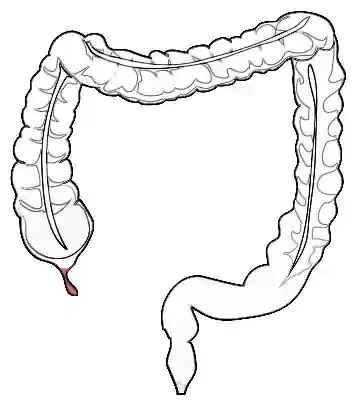
Appendix cancer begins in cells of the appendix and is not one single disease. The two broad groups are epithelial appendiceal cancers and neuroendocrine tumours. Some epithelial tumours produce mucin and can spread within the abdomen, sometimes causing pseudomyxoma peritonei. Appendix cancer may be discovered during surgery for suspected appendicitis or during another abdominal procedure.
Possible signs and symptoms
- Pain in the lower-right abdomen or appendicitis-like symptoms
- Increasing abdominal size, pressure or bloating
- A persistent change in bowel habits
- Nausea or vomiting
- Loss of appetite or unexplained weight loss
- A new abdominal or pelvic lump, or a new hernia
Treatment and care
Treatment depends on the exact pathological type, tumour grade, whether it has ruptured or spread, and whether mucin or tumour deposits are present in the abdomen. Specialist review is especially important because appendix cancers differ from colorectal cancer.
Surgery
Treatment may range from removal of the appendix to a larger bowel operation. Selected people with disease spread across the abdominal lining may be considered for cytoreductive surgery and heated intraperitoneal chemotherapy in a specialist centre.
Additional and systemic treatment
Chemotherapy, targeted approaches, observation or treatment used for neuroendocrine tumours may be considered according to the exact subtype, grade and spread. Follow-up plans are tailored to recurrence risk.
Sources and medical information
Prepared by Tutti Cancer Warriors
Sources checked: 29 July 2026
Appendix cancer is rare and includes several biologically different diseases. The correct pathology diagnosis is essential because treatment for an epithelial, mucinous or neuroendocrine tumour may differ. New or severe right-sided abdominal pain can also be appendicitis and needs prompt medical assessment.
Official sources
Key Facts
RareAppendix cancer affects only a small number of people
Several typesThe two broad groups are epithelial and neuroendocrine tumours