
Back to library
Laryngeal Cancer
Cancer arising in the larynx, the voice box containing the vocal cords between the throat and windpipe.
Understanding laryngeal cancer
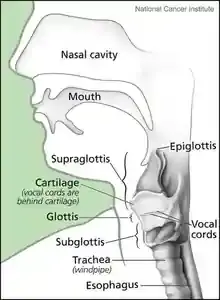
Laryngeal cancer forms in the supraglottis, glottis or subglottis of the voice box. Most are squamous cell cancers. Tobacco and heavy alcohol use are important risk factors, but cancer can occur without them. Treatment aims to control cancer while preserving breathing, swallowing and voice when possible.
Possible signs and symptoms
- Hoarseness or a lasting change in voice
- A sore throat or cough that does not go away
- Pain or difficulty when swallowing
- A lump in the neck or throat
- Persistent ear pain
- Noisy breathing, breathlessness or coughing blood
Treatment and care
Treatment depends on the part of the larynx, stage, voice and swallowing function, general health and personal priorities. Speech and swallowing specialists are important members of the team.
Radiation or surgery
Early cancers may be treated with radiation, laser surgery or partial removal of the larynx. Larger tumours may require more extensive surgery, sometimes including total laryngectomy.
Combined and systemic treatment
Chemoradiation may preserve the larynx in selected advanced cancers. Chemotherapy, immunotherapy or other medicines may be used for recurrent or metastatic disease.
Sources and medical information
Prepared by Tutti Cancer Warriors
Sources checked: 29 July 2026
Hoarseness and sore throat are common and usually not cancer, but a lasting voice change, swallowing difficulty, neck lump or persistent ear pain needs assessment. Noisy breathing, severe breathlessness or coughing significant blood requires urgent care.
Official sources
Key Facts
Voice boxThe larynx contains the vocal cords and connects the throat to the windpipe
Three regionsCancer may arise in the supraglottis, glottis or subglottis