
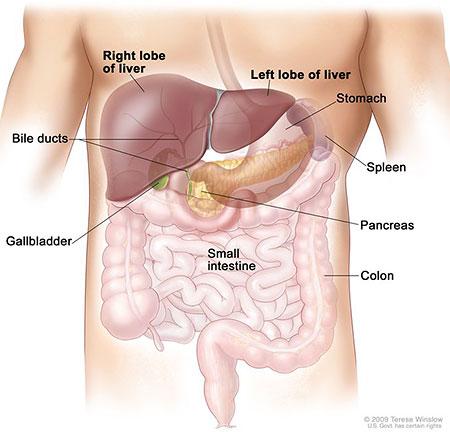
Liver Cancer
Liver Cancer Overview
Symptoms (Often Late)
- Unintended weight loss and loss of appetite.
- Pain in the upper right abdomen.
- Jaundice (yellowing of skin and eyes).
- Abdominal swelling (ascites) or visible veins on the belly.
- White or chalky stools and dark urine.
- General fatigue and weakness.
Therapeutic Challenges
Surgical Resection or Transplant
Ablation & Embolization Therapy
Sources and medical information
Prepared by Tutti Cancer Warriors
Sources checked: 28 July 2026
This page provides general educational information. It does not replace medical advice, diagnosis or treatment from a qualified healthcare professional. Signs and symptoms associated with primary liver cancer can also have other causes. Contact a healthcare professional about a hard lump or persistent discomfort in the upper-right abdomen, abdominal swelling, jaundice, pale stools and dark urine, unexplained weight loss, loss of appetite, unusual tiredness or other concerning symptoms. Chronic hepatitis B or C infection and cirrhosis increase risk; people living with chronic liver disease should discuss appropriate monitoring with their clinician. NCI SEER reports 21.9% five-year relative survival in the United States for liver and intrahepatic bile duct cancer, all stages combined, for 2016–2022. This population statistic groups different cancers and stages and cannot predict an individual outcome.
Official sources
- International Agency for Research on Cancer — Liver fact sheet
- National Cancer Institute — What Is Liver Cancer?
- National Cancer Institute — Liver Cancer Causes, Risk Factors, and Prevention
- National Cancer Institute — Liver Cancer Treatment
- National Cancer Institute SEER — Liver and Intrahepatic Bile Duct Cancer Stat Facts