
Back to library
Nasal Cavity and Paranasal Sinus Cancer
Rare head and neck cancers that begin inside the nose or the air-filled sinuses around it.
Understanding nasal and sinus cancer
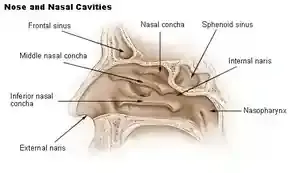
These cancers arise in the nasal cavity or paranasal sinuses. Several cell types can occur, most commonly squamous cell carcinoma. Early symptoms often resemble common sinus problems, and the tumour may be advanced before causing clear signs. Site and pathology determine staging and treatment.
Possible signs and symptoms
- A blocked sinus or one-sided nasal obstruction that does not clear
- Repeated nosebleeds or a persistent runny nose
- Facial pain, pressure, numbness or swelling
- A sore or lump inside the nose or on the palate
- Double vision, eye swelling or another new eye problem
- Upper-tooth pain, loose teeth or dentures that stop fitting
Treatment and care
Treatment depends on the exact sinus or nasal site, cell type, stage, nearby eye or skull involvement and overall health. A multidisciplinary head and neck team is important.
Surgery and reconstruction
Surgery is common and may remove nearby tissue or bone to achieve clear margins. Reconstructive, dental, speech and rehabilitation support may be part of care.
Radiation and systemic treatment
Radiation therapy may be used before, after or instead of surgery. Chemotherapy, chemoradiation, immunotherapy or clinical trials may be recommended according to tumour type and stage.
Sources and medical information
Prepared by Tutti Cancer Warriors
Sources checked: 29 July 2026
Sinus blockage, nasal discharge and nosebleeds are usually caused by non-cancer conditions. Symptoms that are one-sided, persistent, recurrent or associated with facial numbness, swelling, dental or eye changes should be assessed. Sudden vision loss, severe bleeding or breathing difficulty needs urgent care.
Official sources
Key Facts
Several sitesCancer may begin in the nasal cavity or different paranasal sinuses
Several cell typesSquamous cell carcinoma is most common, but other cancers can occur