
Back to library
Salivary Gland Cancer
A rare group of head and neck cancers that begin in major or minor salivary glands.
Understanding salivary gland cancer
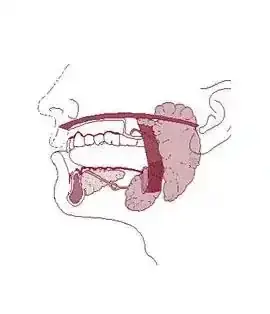
Salivary gland cancers can begin in the parotid, submandibular, sublingual or many small salivary glands in the mouth and throat. There are numerous cell types and grades, so pathology review is important. Most salivary gland lumps are not cancer, but persistent or changing symptoms need assessment.
Possible signs and symptoms
- A persistent lump near the ear, cheek, jaw, lip or mouth
- Facial numbness or weakness
- Persistent facial or jaw pain
- Difficulty swallowing
- Difficulty opening the mouth widely
- Fluid draining from the ear or a neck lump
Treatment and care
Treatment depends on the gland, tumour type and grade, facial-nerve involvement, stage and overall health. A specialist head and neck team should plan care.
Surgery
Surgery to remove the tumour and affected gland is the main treatment for many localised cancers. Nearby lymph nodes may also need removal, while preserving nerve function whenever safely possible.
Radiation and systemic treatment
Radiation therapy is often used after surgery for higher-risk disease or when surgery is not possible. Chemotherapy, targeted therapy or trials may be considered for advanced or recurrent cancer.
Sources and medical information
Prepared by Tutti Cancer Warriors
Sources checked: 29 July 2026
Most salivary gland lumps are benign, but a persistent lump, facial weakness, numbness, pain or swallowing difficulty needs assessment. Sudden facial weakness can also be a neurological emergency and should not be assumed to be cancer.
Official sources
Key Facts
Many subtypesSalivary gland cancers include numerous cell types and grades
Head and neck teamSpecialist pathology and multidisciplinary treatment planning are important